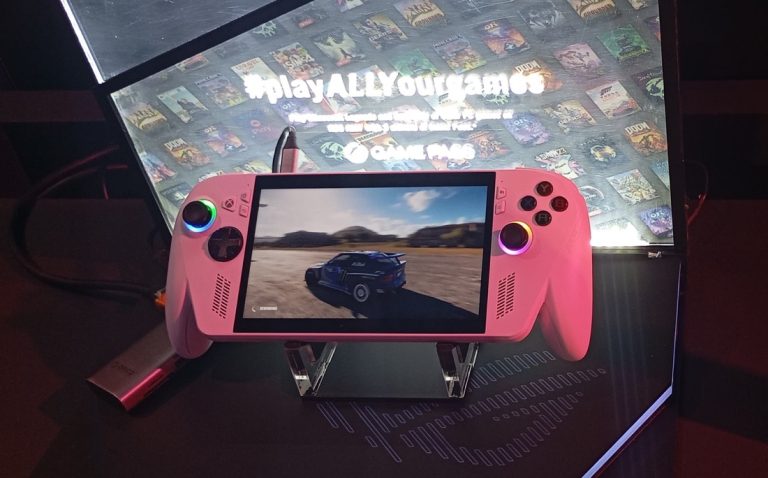
I Daily Drove the Asus ROG Xbox Ally for a Month — It’s the Best Windows Handheld

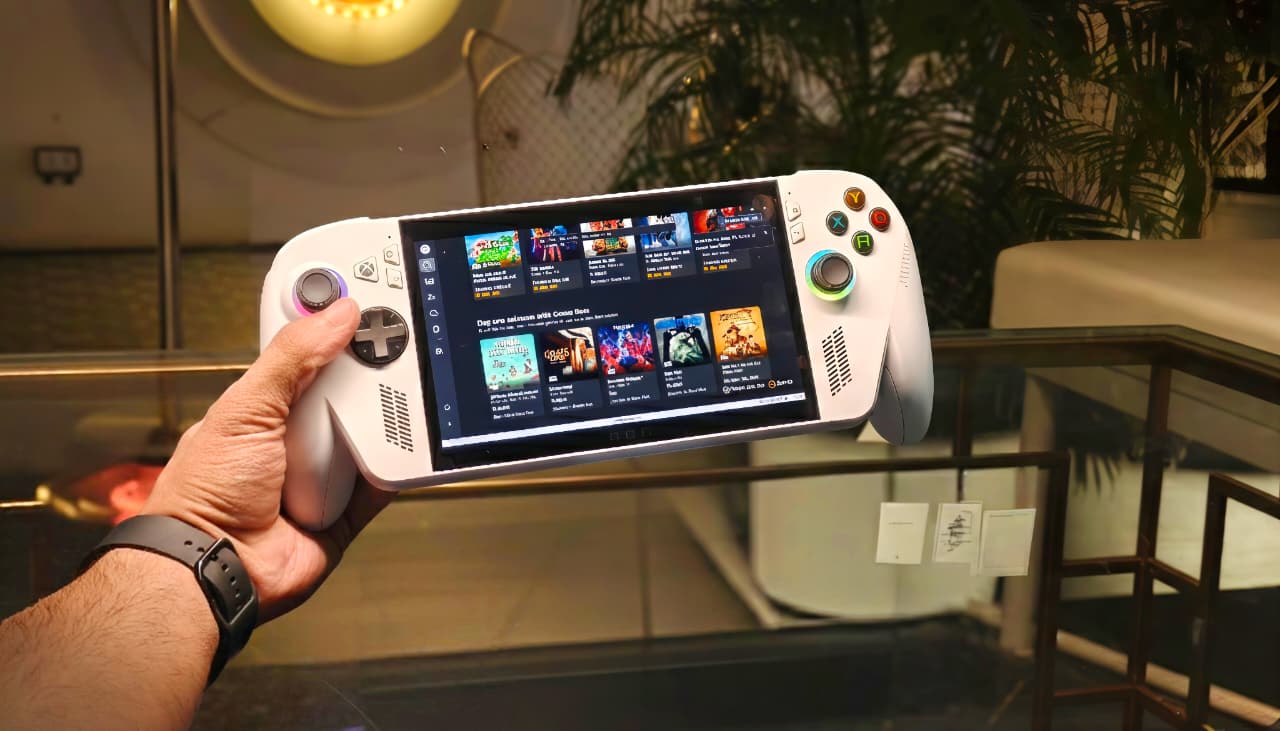
It’s safe to say that the gaming handheld market in India is in its infancy. We don’t have the luxury of the brands the West or China enjoys, and after trying my hand at the Steam Deck on a recent foreign trip, it made me plenty sad. So, when rumors started circulating about a potential collaboration between Asus and Xbox to make a handheld, it got me really excited because the Taiwanese maker brings most of its products to India. And I was right, Asus recently introduced the regular Xbox Ally at a price of INR 69,990. For the money, you get a custom-built Ryzen Z2 A processor, 16GB LPDDR5 RAM, and 512GB internal storage.
I’ve read plenty of reviews from my tech journalist friends from the US, saying its price isn’t what an Xbox-branded console should cost. But the truth is, if you live anywhere outside North America—which a lot of us do—consoles aren’t really cheap. They cost significantly more, and when you factor in that other Windows handhelds cost the same, if not more, the regular ROG Xbox Ally becomes a solid option. Couple that with a fresh layer of custom Xbox software, and the console’s value becomes more apparent. But should you invest in one? To find out, I called Asus, got the Xbox Ally for review, and used it as my daily gaming machine while covering a series of events across the country.
Asus ROG Xbox Ally Review
Summary
The Asus ROG Xbox Ally is for the people who are frequently on the go, but still want to play the games they love. Its performance is really good, the FullHD 120Hz display is bright, the ergonomics and design are the best in business, and even the Xbox full-screen experience is a really good step in making Windows handhelds feel more like a console. Windows 11 also unlocks a whole new experience, transforming the Ally into a full PC that can be used for work and emulation.
ROG Xbox Ally: Specs
| Display | 7-inch FHD, 16:9, 120Hz refresh rate IPS panel |
| Dimensions | 11.5 x 4.8 x 2 inches |
| Weight | 670 g |
| CPU | AMD Ryzen Z2 A |
| RAM | 16GB LPDDR5 |
| Storage | 512GB SSD |
| Wireless connectivity | Wi-Fi 6E, Bluetooth 5.4 |
| Ports | 2x USB 3.2 Gen 2 Type C, 1x microSD card reader, 1x 3.5mm audio jack |
| Price | $599/INR 69,990 |
Design & Hardware
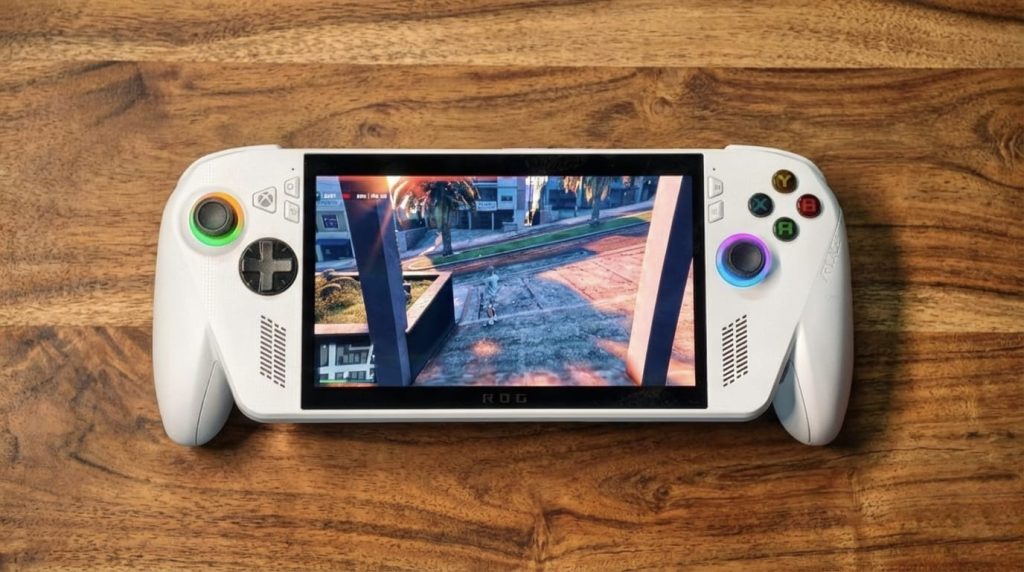
Even though my experience with handhelds isn’t extensive, I do really like what Asus and Xbox have cooked up with the Ally. Make no mistake, the Ally is made of plastic, but it feels sturdy. There’s no chassis flex, and given my extensive travel with the device in my backpack without a carrying case, it can handle just about everything. The white color (exclusive to the regular Ally) is a real head-turner. I was constantly asked about it by strangers at the airport and while playing at a cafe. The only gripe I have about the white color is the fact that it gets dirty. Any crumbs you have on your fingers will automatically be applied to the Ally. So, don’t forget the cleaning cloth.
Too many handheld consoles chase that small and thin form factor and end up compromising on comfort, which is the backbone of any handheld experience. Fortunately, for the new Ally, the good news continues in the comfort department. The grips that Asus incorporated make it the most comfortable gaming handheld by a long shot. Sure, it does weigh more than the Steam Deck at 670 g, but everything feels thought out in the sense that all buttons are exactly where your fingers would naturally rest. And you don’t have to perform that awkward gymnastics with your fingers to reach anything.
On top, the regular Xbox Ally houses a couple of USB-C ports (both of which can be used for charging), an SD card reader, a headphone/microphone combo jack, volume controls, and a power button that doubles as the fingerprint scanner. The more expensive Ally X swaps out the regular USB-C ports for ones that support USB 4.
Controls & Haptics
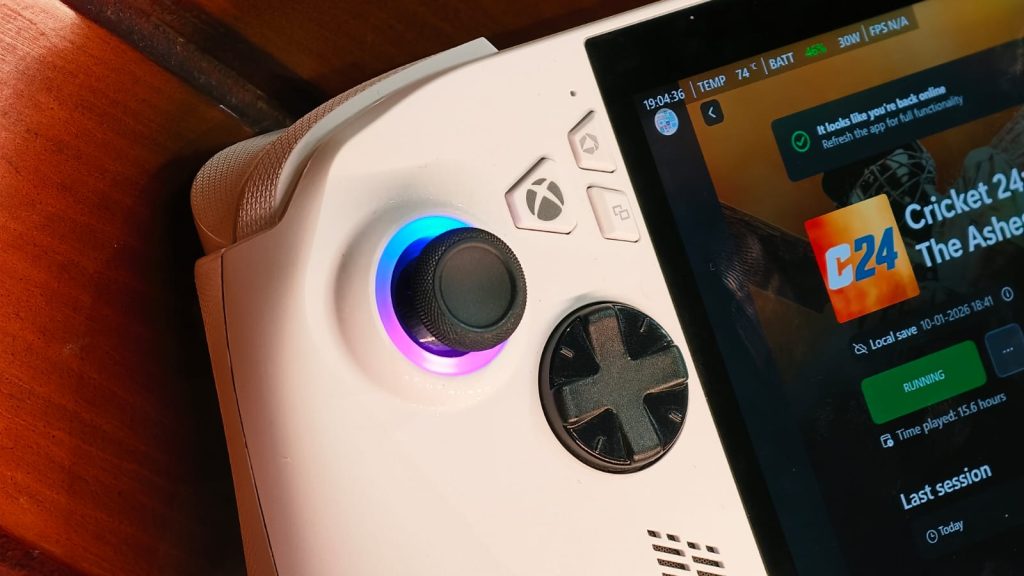
Controls are what make or break any console experience. If you can’t control your in-game character, the whole experience falls off a cliff. Fortunately, the Xbox Ally doesn’t suffer from any of that. It’s essentially an Xbox controller attached to a display, in the sense that it contains two thumbsticks, ABXY buttons, a D-Pad, shoulder triggers, and a couple of extra buttons on the back. All of which gives the console a sense of familiarity. The thumbsticks, while not Hall Effect, are snappy and accurate and have held up well during my travels. The D-Pad buttons are clicky and responsive, and the ABXY buttons have tactile feedback. The shoulder triggers are Hall Effect and are plenty accurate, which translates to a really nice gaming experience.
The couple of extra paddles on the back can be customized using the Armoury Crate app. The app also lets you remap regular buttons. To make the experience more immersive, the Ally includes haptics that sync with the game and provide rumble. While I wouldn’t call it the most impressive haptic motor, certainly not to the level of PS5’s controllers, they do a decent job of improving the overall gaming experience. Beyond that, I was hugely impressed by the speakers, which pack a real punch in terms of bass and provide a really decent multimedia experience.
Display
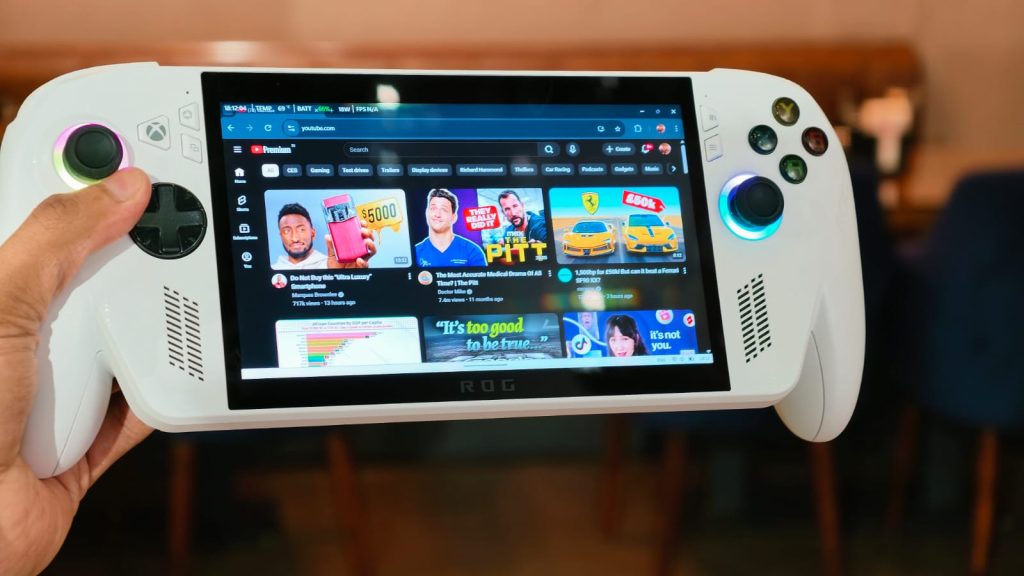
One thing that Asus hasn’t changed from the previous Ally is the display, but that doesn’t mean it’s bad. You still get the same 7-inch Full HD IPS panel that supports a variable refresh rate of up to 120Hz. While I’d have loved to see an OLED panel, the glossy IPS keeps color looking pretty for the most part. I measured 96% coverage of the sRGB color space, while DCI-P3 numbers were around 74%. Since nobody is editing videos on a display like this, the coverage is pretty decent. Unfortunately, as a consequence of the glossy texture, the panel is very prone to fingerprints, so you’ll be carrying a microfiber cloth everywhere.
When I first started using the ROG Ally in brighter environments, the brightness seemed a bit off. Like the panel wasn’t bright enough. Fortunately, I soon discovered that a Windows setting that dims brightness on battery power was enabled. After disabling it, the experience was a lot better. I measured a peak brightness of over 450 nits, which is really decent but just about gaming everywhere. The variable refresh rate also pays huge dividends in certain games, and I didn’t experience any tearing.
Software & Performance
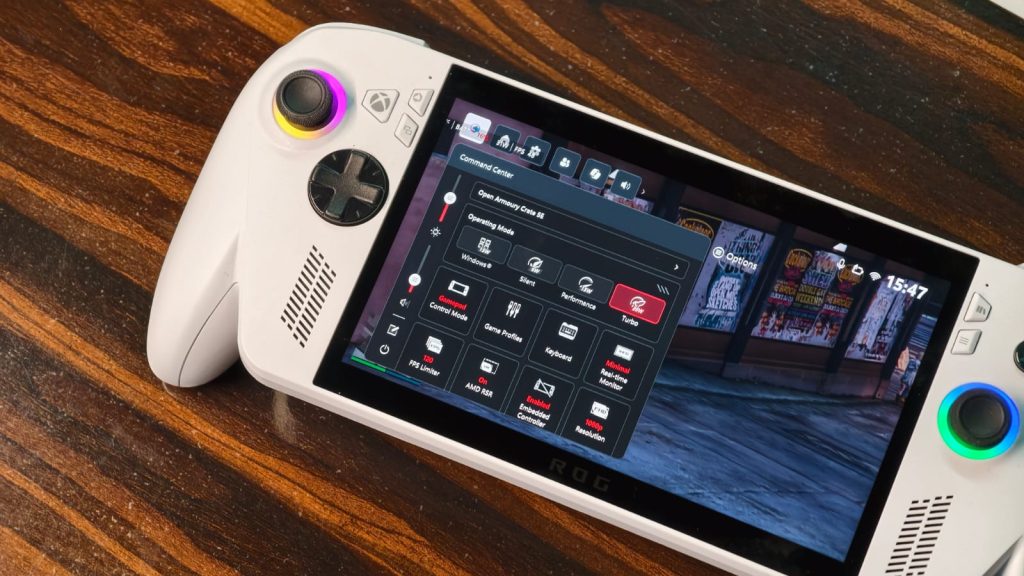
The first question I had when Asus unveiled its collaboration with Xbox was how they did it. How can they prevent Windows from creeping with its unnecessary fluff and ruining the console experience? And did they succeed? Well, the answer is both yes and no. The Xbox Full Screen Experience is what drives everything. It’s the main selling point of the Xbox Ally, and I love it. When you power up the device, it boots directly into the Xbox launcher, so you don’t have to deal with Windows. Since the OS is very resource-hungry, which is super precious on a handheld, the launcher also restricts any Windows activity.
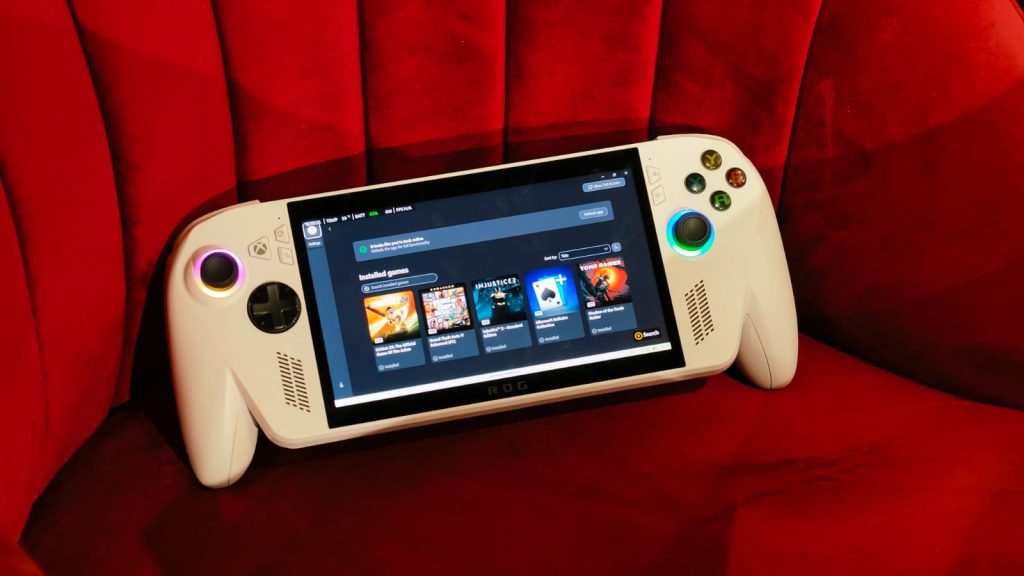
Sure, you can switch to Windows mode with a single button press, but if you don’t want it, Windows will never appear. And that’s what every other Windows handheld lacks. Clicking the Xbox button on the console brings up a neat menu of all your games (even the ones installed from third-party launchers), along with settings to adjust sound and brightness, an Xbox Social menu to invite friends, and the Gaming Copilot. Beyond that, there’s also an Armoury Crate tab that handles all the performance metrics. You can cycle between the different performance modes, enable game overlay of the stats, change resolution, set frame limiter, and a lot more. My point is that everything is thought about.
Windows is still Windows

Like a coin, there’s another side to this story as well. The Xbox gaming experience isn’t perfect. Games sometimes don’t recognize the controls and instead display keyboard options. While clicking the Xbox button did solve this problem, it’s not what comes to mind first. You might know how to do it, but someone who hasn’t played around with PCs before might not. I also ran into a unique issue: even after buying Xbox Game Pass, I couldn’t access EA games. Typically, EA games are included in Game Pass, but for some reason, it took a week for the EA Play app to recognize that I have the subscription. Beyond that, if you open the Windows version and then launch the Xbox launcher, you’ll need to restart the device to achieve optimal performance. Otherwise, Windows will continue to run in the background.
As much as I’ve ranted about Windows, it has its perks. For starters, it unlocks a whole world of games, including emulation, which would work amazingly with the controls. Plus, the Ally can be a PC, too. Just connect it with a monitor, and voila, your handheld is a workstation capable of handling any everyday task. Speaking of being a PC, I also ran a series of benchmarks to see where the new AMD Ryzen Z2 A stands. The Ally scored 1,171 in Geekbench’s single-core test and 4,398 in the multi-core test, putting it right on par with the likes of the Steam Deck OLED.
How Does It Game?
Time to address the elephant in the room, and perhaps the only reason anyone would buy a device like this: gaming. The Ally houses the AMD Ryzen Z2 A processor, coupled with integrated RDNA 2 architecture graphics. And the performance will ultimately depend on the type of games you play. I tried pretty much the entire library there is. In demanding titles like Cyberpunk and Starfield, you’ll ideally be running the game at 720p, with low to medium settings. In Cyberpunk 2077, the Ally managed to push to around 40 fps, while Starfield was above the 30 fps threshold. I also tried AMD’s FSR 2.1, and there was a noticeable increase in the frames. Though some people don’t like these generated frames, so your mileage may vary.
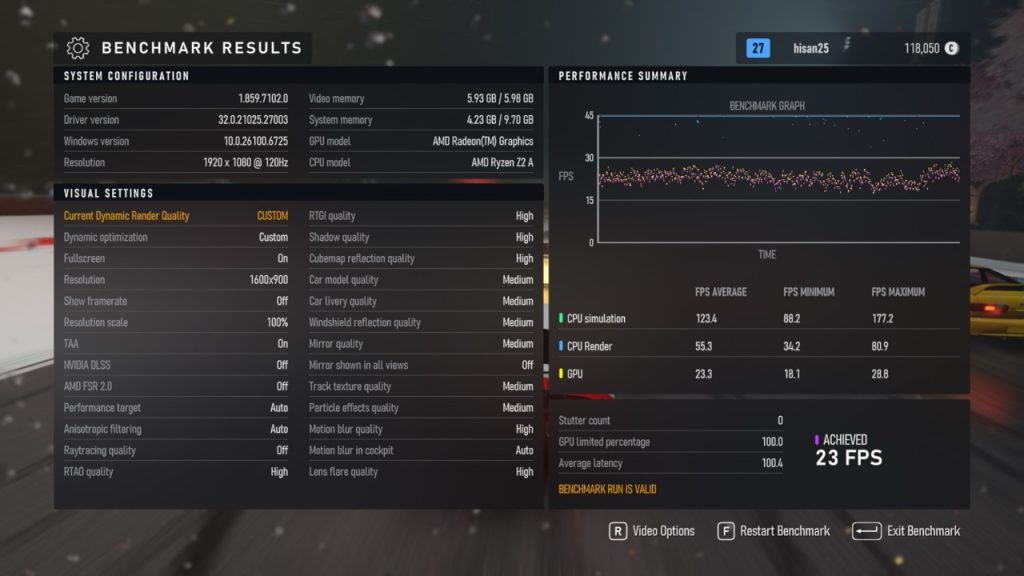
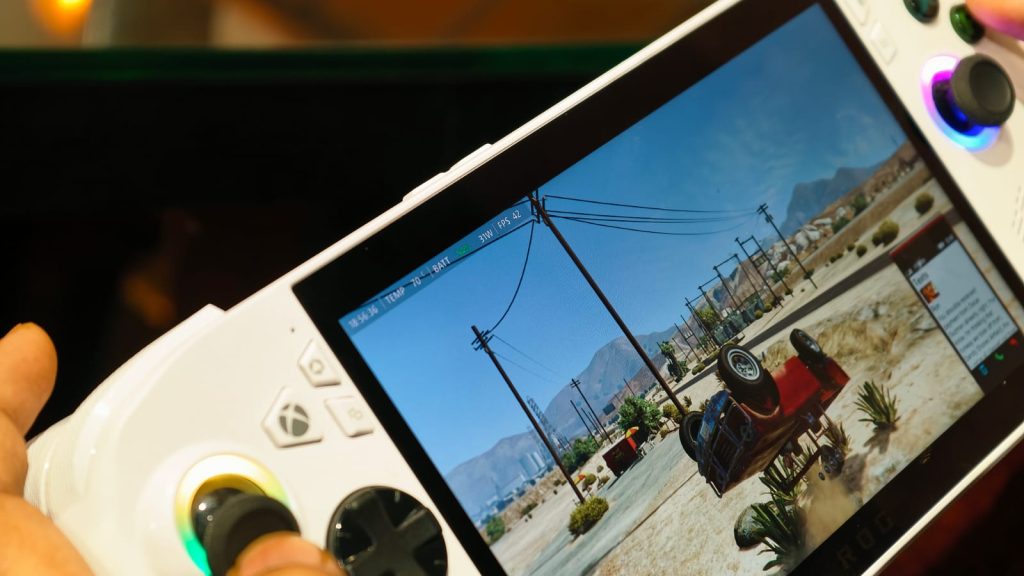
Being more sensible and turning over to titles like GTA 5 Enhanced Edition, I had a lot more fun. The graphics settings were set to medium/high, and I easily got over 40 fps, sometimes even 60 fps, while playing online. The good news continues with titles like Shadow of the Tomb Raider, Forza Motorsport, F1 2024, and Injustice, where, once again, the Ally easily managed to hit the sweet spot of 40-45 FPS on medium settings. It’s possible to get up to 60 fps with the console, but I prefer more detail. In lighter titles like Real Cricket and Rematch, the frame rates were always over 60.
Since the Ally is an Xbox console, you can also stream games. Streaming capabilities are included with the premium tier of Game Pass. I compared my GTA Online experience between the two, and given the strong internet connection, it was really decent. Of course, you obviously can’t expect to play first-person shooters, but for story games, it’s fine.
Battery Life
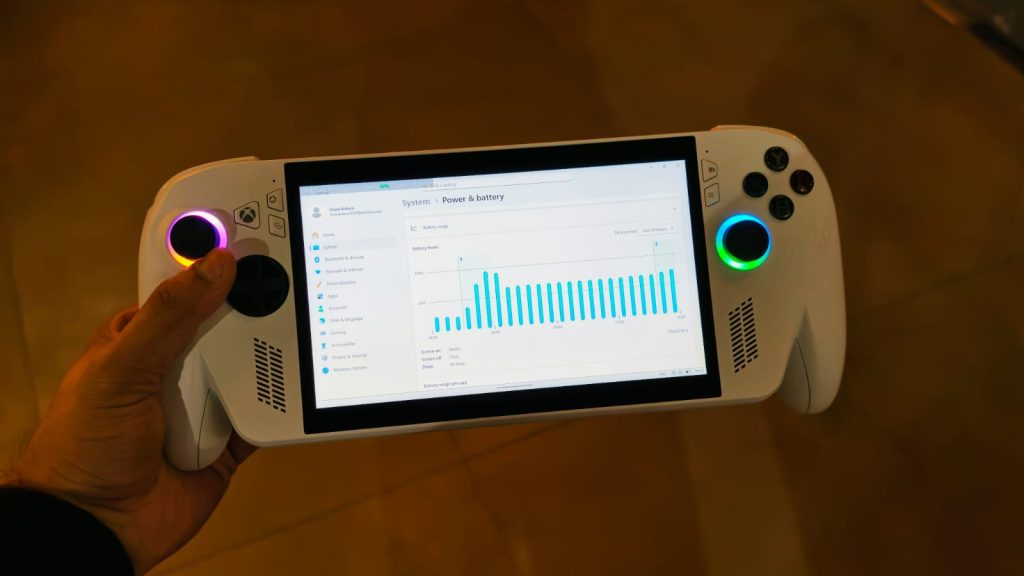
One of the big differentiators between the regular Ally and the Ally X, apart from the processor, is the battery. The normal Ally houses a 60W cell, while the X gets a beefier 80W battery. In retrospect, the Ally’s battery life is about what you’d expect. When running GTA V online from 100%, the console lasted me about 2 and a half hours before shutting down.
It is important to note that the brightness was set to maximum and the performance mode was Turbo (the highest tier). Turning the brightness and performance modes down a notch helped me cross that 3-hour threshold. Charging is handled by a 65W fast charger that can fully charge the battery from 0% to 100% in just over an hour.
Verdict
At INR 69,990, the ROG Xbox Ally is certainly a niche product. It’s for people who are frequently on the go, but still want to play the games they love. And luckily, that happens to be me. As a tech journalist, I travel regularly, which means long waits at airports, and for those times, the Ally proved to be a lifesaver. Its performance is really good, the FullHD 120Hz display is bright, the ergonomics and design are the best in business, and even the Xbox full-screen experience is a really good step in making Windows handhelds feel more like a console. Windows 11 also unlocks a whole new experience, transforming the Ally into a full PC that can be used for work and emulation.